If interested in joining the lab, please send Dr. Wenzel an e-mail using the contact form here.
Please note that our laboratory spaces commonly fill up 12 months in advance, and the contact page has up-to-date recruitment information.

Questions We Ask
Can replacing disease microglia with healthy microglia cure disease?

Can patient-derived models provide insight on mechanisms driving the onset of diseases?

How can we modify care systems to improve the lives of Canadians?

Current Lab Members

Kasra Khunjush
Graduate student
Hobbies: Tennis, Football (a.k.a. Soccer), Stand-Up Comedy, Movies, and Cooking
Research Question: What roles do microglia play in neurometabolic diseases?
Awards: CIHR CGRS M scholarship, UofS NFGSSP awardee, Stem Cell Network travel awardee

Miku Tibule
Graduate student
Hobbies: Cooking, Dance, Judo, Traveling
Research Question: How does ABCD1 deficiency affect physiology?
Leadership: Stem Cell Network Trainee Communications Committee Member
Publications

Lily Dobchuk
Graduate student
Hobbies: Reading, Hiking, Cooking
Research Question: How do lipids impact oligodendrocyte-neuron signalling?
Kasra Khunjush
Graduate student
Hobbies: Tennis, Football (a.k.a. Soccer), Stand-Up Comedy, Movies, and Cooking
Research Question: What roles do microglia play in neurometabolic diseases and neurodevelopment?
Awards: CIHR CGRS M scholarship, UofS NFGSSP awardee, Stem Cell Network travel awardee
Miku Tibule
Graduate student
Hobbies: Cooking, Dance, Judo, Traveling
Research Question: How does ABCD1 deficiency affect physiology?
Awards: Top poster at SPA 2026
Leadership: Stem Cell Network Trainee Communications Committee Member
Publications
Lily Dobchuk
Graduate student
Hobbies: Reading, Hiking, Cooking
Research Question: How do lipids impact oligodendrocyte-neuron signalling?

Olivia Dyck
Honor’s student
Hobbies: Reading, Cooking, Running
Awards: Top poster at SURE 2026
Research Question: Do iPSCs derived from patient fibroblasts help inform the treatment and management of pediatric metabolic disorders?

Téyanna Harrison
Undergraduate research student
Hobbies: Volleyball, Reading, Singing
Research Question: Can iPSC-derived neurons and astrocytes unlock new insights into the treatment of pediatric metabolic disorders?
Avery Brossart
Undergraduate research student
Hobbies: Reading, Collecting, Gaming, Crafting
Research Question: Can brain organoids provide insights into the treatment of pediatric diseases?
Olivia Dyck
Honor’s student
Hobbies: Reading, Cooking, Running
Awards: Top poster at SURE 2026
Research Question: Do iPSCs derived from patient fibroblasts help inform the treatment and management of pediatric metabolic disorders?
Téyanna Harrison
Undergraduate research student
Hobbies: Volleyball, Reading, Singing
Research Question: Can iPSC-derived neurons and astrocytes unlock new insights into the treatment of pediatric metabolic disorders?
Avery Brossart
Undergraduate research student
Hobbies: Reading, Collecting, Gaming, Crafting
Research Question: Can brain organoids provide insights into the treatment of pediatric diseases?
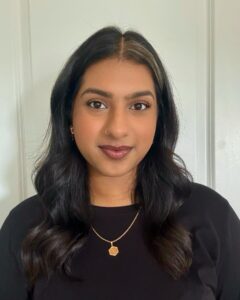
Sarah Shaban
Medical student
Hobbies: Crocheting, Reading, and Zumba
Awards: Dean’s summer project
Research Question: What affects care seeking decisions for patients with rare pediatric diseases?
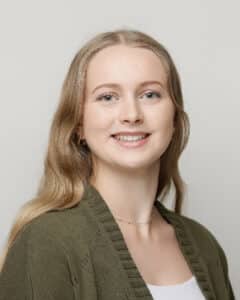
Kiera M. Bohrson
Honor’s student
Hobbies: Coaching volleyball, doing puzzles, watching the bluejays
Research Question: How do glia respond to lipids of different acyl chain lengths?
LinkedIn
Aly Clark
Honor’s student
Hobbies: Swimming, Woodcarving, Painting
Research Question: What are the roles of the oxytocin receptor in behavior?
Sarah Shaban
Medical student
Hobbies: Crocheting, Reading, and Zumba
Awards: Dean’s summer project
Research Question: What affects care seeking decisions for patients with rare pediatric diseases?
Kiera M. Bohrson
Honor’s student
Hobbies: Coaching volleyball, doing puzzles, watching the bluejays
Research Question: How do glia respond to lipids of different acyl chain lengths?
LinkedIn
Aly Clark
Honor’s student
Hobbies: Swimming, Woodcarving, Painting
Research Question: What are the roles of the oxytocin receptor in behavior?
Principal Investigator
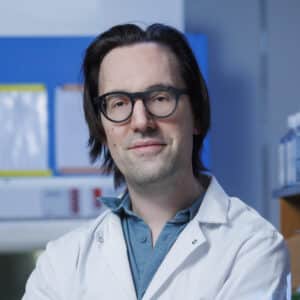
Dr. Wenzel (Ph.D., B.Ed.) is an Assistant Professor, licensed Canadian schoolteacher, and healthcare advocate.
Before research, Dr. Wenzel was head of a special education department in British Columbia. In this role, Dr. Wenzel taught high school students with a diverse array of learning barriers, and created accessible lesson plans that encouraged school attendance and engagement. After school, Dr. Wenzel was a concert sound technician, mixing and recording concerts for musicians, including Juno-award winning artists. Life events led Dr. Wenzel to move 400 km away from their hometown for a doctoral program at the University of British Columbia. Dr. Wenzel was awarded their doctoral degree in 2020, at the beginning of the COVID-19 pandemic. Before lock downs were in place, Dr. Wenzel was offered a postdoctoral fellowship at the University of Saskatchewan to start the first stem cell laboratory at the institution, and this laboratory is currently where Dr. Wenzel and team conduct their research. When asked what made Dr. Wenzel chose this career, they often respond “serendipity” because they ended their undergraduate studies claiming they would never write a thesis because “writing over a hundred pages seemed boring”.
BlueSky | Instagram | LinkedIn | X | Publications
Hobbies: Downhill skiing, yoga, cooking, D&D, hiking up mountains
Disclaimer: For long downhill skiing runs or hiking up mountains, you have to visit BC or Alberta
Lab Alumni
- Grayson T. (Medical Student), 2026-present
- Carter J. (Medical Student), 2026-present
- Kemi O. (Psychiatry Resident), 2025-present
- Heather O. (Pediatrics Resident), 2024-present
- Ethan Adams (Honor’s Student, Stem Cell Network summer studentship awardee, NSERC USRA awardee, CoM biomedical summer research awardee), 2024-2026. Adams was key for validating our methods for detecting pathogenic lipids using liquid chromatography-mass spectrometry. Where are they now: Dentistry.
- Ngoc Minh Tuyen Nguyen (Honor’s student), 2025-2026. Nguyen helped collect pilot data regarding oxytocin’s role in astrocyte-neuron signalling.
- Ketan Mann (Undergraduate Research Assistant), 2025. Mann assisted us in screening biological samples for pathogenic changes.
- Rich Kimberly Santiago (Saskatchewan Polytechnic Research Technician Student), 2025. Santiago developed low-effort immunohistochemistry techniques for brain organoid and human brain slice imaging.
In the news
Highlights
Researchers Under The Scope Podcast
Dr. Wenzel was able to sit down with Jen Quesnel and talk about brains and starting his laboratory!
University of Saskatchewan
Our team is celebrated as the only researchers in the province given a Stem Cell Network award!
International Society of Neurochemistry
Dr. Wenzel was asked to provide insight on the importance of reviews, and how to write them!
This Year’s News
- August 26, 2026: Olivia Dyck won the top poster prize at the Society for Undergraduate Research Expo at the University of Saskatchewan for her work on X-linked adrenoleukodystrophy stem cells! What a star!
- June 18-19, 2026: Dr. Adelaine Leung kindly invited Dr. Wenzel to co-chair the Protein Structure, Function, and Malfunction Symposium (PSFaM) conference and be the liaison for the neuroscience cluster. As always, we love any opportunity to talk cool science with cool people!
- May 13, 2026: Dr. Wenzel was awarded the 25 for 25 Silver Anniversary ‘Rising Star’ award by the Stem Cell Network! He humbly acknowledges that our team was the driving force of behind this. The announcements are linked above.
- May 4, 2026: Sarah Shaban was awarded a Dean’s Summer Project to conduct qualitative research this summer during her medical school studies. Looking forward to having you back!
- April 11, 2026: Miku won the Top Poster award at the annual Saskatchewan Psychiatry Association 2026 meeting! Way to go!
- April 1, 2026: This is not an April’s fools joke. Kasra was awarded the prestigious CIHR CGRS M scholarship for his Master’s degree research. What an impressive accomplishment!
- March 18, 2026: Way to go Ethan! Big congratulations on being offered both an NSERC USRA and the College of Medicine biomedical summer research award! We’re excited to welcome you back this summer!
- February 5, 2026: Dr. Wenzel was invited to give the opening talk at VIDO’s (Vaccine and Infectious Disease Organization) 2026 Research Day! Thanks for the invite, and we hope it was inspiring and not too cheeky!
- January 29, 2026: Dr. Wenzel accepted his Santé award for his #1 ranked new research program, marking the beginning of some cool and meaningful science!
- January 26, 2026: Téyanna, Olivia, Avery and Lily join the laboratory! Welcome! Have fun in your training with Miku, We look forward to supporting your learning!
- January 28, 2026: Drs. Zucchet and Wenzel’s publication is now available online!
2025
-
-
- November 11, 2025: Dr. Wenzel (PhD) and Dr. Zucchet (MD) have their manuscript on ATV injuries in Saskatchewan accepted for publication in the official journal of the Canadian Paediatric Society – Paediatrics & Child Health! Great job!
- October 17, 2025: Dr. Wenzel is invited to the International Society of Neurochemistry (ISN) Schools Committee to help facilitate the learning of the global neurochemistry community.
- September 29, 2025: Kasra is offered an generous scholarship from the College of Graduate & Postdoctoral Studies for his studies. Congrats Kasra!
- September 10, 2025: Dr. Wenzel is invited to the Editorial Board of Scientific Reports, and is leading the publication of a collection on ‘Glia in Neurological Disorders’
- September 2, 2025: Miku Tibule joins the lab and takes on a Fall research project on X-linked adrenoleukodystrophy and gene editing, Kasra starts his graduate program with us investigating the role of macrophages in the pathogenesis and treatment of this disease, Ethan begins his Honor’s project to validate an LC-MS method to measure the hallmark features of this leukodystrophy, and Tuyen starts generating OXTR-deficient cell lines as part of their Honor’s project!
- August 20, 2025: Dr. Wenzel gives a short talk on the importance of writing to young researchers in neurochemistry at ISN-ASN 2025 in New York. Thanks for inviting us, ISN!
- July 1, 2025: Dr. Wenzel publishes an article on new neurochemistry tools in the Journal of Neurochemistry with 30 other researchers from around the world!
- June 19, 2025: Big congratulations to the lab! All our hardwork paid off, and we were ranked the #1 new biomedical research program in Saskatchewan! We thank Dr. Michael Kelly and Dr. Jane Alcorn for the support; we could not have done it without you!
- May 14, 2025: Ketan Mann joins the lab to get some laboratory experience for a couple months! Welcome!
- May 6, 2025: Kasra Khunjush joins the lab. Welcome aboard Kasra!
- May 5, 2025: The laboratory welcomes Rich Santiago-Cabural, a SaskPoly Technic practicum student, to train in the lab! Rich will be working alongside Dr. Wenzel to finish establishing our histology standard operating procedures with our “new” instruments.
- May 4, 2025: Ethan Adams is awarded a Stem Cell Network summer studentship, and starts working in the lab! Welcome Ethan!
- May 1, 2025: Wenzel lab officially opens with over $600,000 in external funding! Exciting to start working towards improving the health of children and adolescents!
- April 1, 2025: Fernanda Mascarenhas was awarded the 2025 Misiweskamik International Postdoctoral Fellowship, and will be flying from Brazil to begin working with Dr. Ana Paula Mendes-Silva and Dr. Wenzel in November 2025! Can’t wait to have you in the department, Fernanda!
- March 13, 2025: Dr. Wenzel was invited to be apart of the Stem Cell Network’s Early Career Researcher Committee, and looks forward to continuing to create cool learning opportunities to bolster the Canadian regenerative medicine community.
-
Our Research
* = supervised trainee, ^ = corresponding author
a. Articles published or accepted in peer-reviewed journals
-
- Josephson JK, Barnett JA, Yuzbashian E, Verdugo-Meza A, Murch SJ, Wenzel TJ, Klegeris A, Sharkey KA, Gibson DL^. (2026). Microbiome-driven alterations in tryptophan metabolism contribute to behavioral comorbidities in the Muc2 knockout mouse model of chronic colitis. Gut Microbes. 18, 2689121. https://doi.org/10.1080/19490976.2026.2689121
- de Tena IB^, Sallie FN^, Abiero AR^, Rizzi B^, Champarini LG^, Corti E^, Masella G, Dunn AL, Binder LB, Wenzel TJ, Robles AI, Anversa RG, Tremblay C, Fokoua AR, de Lima RMS, D’Ávila M, Truong TTT, Pierce JC, Rodrigues RS, Dinamarca-Villarroel L, Almeida FB, Piironen A-K, Aguiar AFL, Jaramillo AM, Santos L, de Lang A, Nutt DJ, Lawrence AJ. (2026). Towards mechanism-informed treatments for mental health. J. Neurochem. 170, e70477. https://doi.org/10.1111/jnc.70477
- Zucchet A^, Wenzel TJ. (2026). Characterizing all-terrain vehicle (ATV)-related harm in Saskatchewan children and youths: A retrospective chart review of patients presenting to hospitals in Saskatoon, Canada from 2016-2021. Paediatrics & Child Health: the official journal of the Canadian Paediatric Society. 2026, pxaf121. https://doi.org/10.1093/pch/pxaf121
- Abbondanza A, Kim N, Lima-Filho RAS, Amin A, Anversa RG, Almeida FB, Cardozo PL, Carello-Collar G, Carsana EV, Folarin R, Guerreiro S, Ijomone OK, Lawal SK, Matias I, Mbagwu SI, Niño SA, Olabiyi BF, Olatunji SY, Olasehinde TA, Ruankham W, Sanchez WN, Soares-Cunha C, Soto PA, Soto-Verdugo J, Strogulski NR, Tomaszewska W, Vieira C, Chaves-Filho A, Cousin MA, Rinken A, Wenzel TJ^. (2025). Dissection of neurochemical pathways across complexity and scale. J Neurochem.169, e70160. https://doi.org/10.1111/jnc.70160
- Wenzel TJ^, Desjarlais JD*, Mousseau DD. (2024). Human brain organoids containing microglia that have arisen innately adapt to a β-amyloid challenge better than those in which microglia are integrated by co-culture. Stem Cell Res. 15, 258. https://doi.org/10.1186/s13287-024-03876-0
- Wenzel TJ^, Mousseau DD. (2024). Brain organoids engineered to give rise to glia and neural networks after 90 days in culture exhibit human-specific proteoforms. Front. Mol. Neurosci. 18, 1383688. https://www.doi.org/10.3389/fncel.2024.1383688
- Wenzel TJ^, Le J*, He J, Alcorn J, Mousseau DD. (2023). Incorporating a greater diversity of cell types, including microglia, in brain organoid cultures improves clinical translation. J. Neurochem. 164, 560–82. https://doi.org/10.1111/jnc.15741
b. Chapters in books
-
- Wenzel TJ^, Mousseau DD. (2025). Chapter 19: Maximizing the utility of brain organoid models and overcoming their perceived limitations. Handbook of Neural Engineering: A Modern Approach. Elsevier. ISBN: . Invited by editor Dr. Stephanie Willerth (University of Victoria).
c. Conference publications
-
- Wenzel TJ^, Desjarlais JD*, Mousseau DD. (2023). Microglia in brain organoids exhibit different immune responses if developed innately versus microglia integrated by co-culture. J Neurochem, 166: 21-27. https://doi.org/10.1111/jnc.15895
- Wenzel TJ^, Le J*, Heistad R, Alcorn J, Mousseau DD. (2022). Microglia derived from stem cells exhibit a more homeostatic and adult-like phenotype in brain organoids than in a monoculture. J. Neurochem. 162: 111-65 (international conference proceedings). https://doi.org/10.1111/jnc.15675
Values
We believe that people from diverse backgrounds (race, ethnicity, nationality, gender identity, different physical abilities) with diverse perspectives and insights are integral to making breakthroughs in science.
We understand that not everyone works the same way, so we are flexible with location and time of research.
All students will have equitable opportunity for professional development activities. As part of this value, we will consider personnel without prior relevant experience.
All personnel should be able to work in supportive and inclusive environment that is free from harassment and discrimination, and we pledge to uphold our work environment to this standard.
Training is core to our laboratory, and thus all personnel will have 1-on-1 support and clear learning objectives.
We understand improving equity, diversity, inclusion and teaching practices require constant review, so we always seek feedback to improve our environment.
Funding
We are grateful to those who have sponsored our research. To date, for every $1 given to our research, our group been able to raise an additional $0.49. All financial support is used an economical manner, and has supported the training of 16 researchers.



Donations: If you are interested in directly supporting our research, please fill out this donor contact form. Alternatively, you can use this form on the University of Saskatchewan website, designate your gift to “Other Area as Specified in Comments”, and in the comments indicate “Gift directly and solely to Dr. Wenzel’s research on brain diseases”. 100% of your donation will go directly towards research in our laboratory, and we will be able to provide a tax receipt. We extend our heartfelt gratitude to our donors whose generosity drives our research in developing treatments and creating better care systems for youths with brain diseases.